Appendix – Retailers
Retailers are assessed according to companies’ commitment and engagement in combating deforestation, specifically with regard to the cattle supply chain and consumer relations. For retailers, the Radar Verde assessment analyzes three main issues:
- Policy: The company’s commitment regarding the level of control to be adopted to prevent deforestation throughout the beef production chain. The score will be based on the items in the Radar Verde questionnaire and on public documents and information available on retailers’ websites. The score will be calculated proportionally to the number of units covered by the Policy.
- Policy Implementation: The score will be based on public documents available or submitted by the organization, such as Sustainability Reports and independent audit reports related to cattle purchasing. The score will be calculated proportionally to the number of units covered. In the Sustainability Report, GRI indicator 2-2 addresses the units included in the scope, and this information will be used to calculate proportionality. In the case of an independent report provided by the company, the scope described in the document will be used.
- Engagement: Company initiatives aimed at engaging and mobilizing suppliers, consumers, and the brands sold to promote deforestation-free supply chains. The score will be based on public information available through companies’ official channels and on responses to the Radar Verde questionnaire, considering communication, transparency, market awareness-raising, promotion of environmental commitments, and encouragement of responsible practices throughout the beef supply chain. The score will be calculated proportionally to the number of initiatives presented.
Analysis of Supply Chain Control
Growing concern about sustainability has driven retailers to adopt more robust environmental compliance practices linked to traceability throughout the beef supply chain. In addition to strengthening supplier control mechanisms, the role of companies in promoting practices aligned with ending deforestation among consumers, suppliers, and the brands sold has also become increasingly important. To assess companies’ performance in this context, a classification model was structured to measure both commitment and progress in implementing good practices and the level of retailer engagement in promoting deforestation-free supply chains.
The analysis of supply chain control and engagement initiatives allows retailers to understand their current stage and identify opportunities for improvement, increasing transparency, reducing risks, and strengthening alignment with societal and market demands.
In this context, it is essential to adopt mechanisms capable of objectively measuring the level of commitment and the effectiveness of the actions implemented by companies. Standardized measurement not only enables comparison among different actors in the sector, but also guides strategies to expand traceability and ensure that environmental commitments move beyond formal statements and translate into verifiable practices. This creates a solid basis for assessing the level of supply chain control based on clear, evidence-based criteria.
See below how the scores for Policy and Implementation are distributed, as well as the forms of evidence considered:
Control Level: Policy (18% weight)
Direct Farm: 18 points
Examples of accepted evidence: policies, procedures, websites, and reports covering both direct and indirect farms.
Indirect Farm: 18 points
Examples of accepted evidence: policies, procedures, websites, and reports covering both direct and indirect farms.
Control Level: Implementation (80% weight)
Direct Farm
80 points: Has a Sustainability Report containing information on the cattle purchasing policy, traceability, and an assurance statement issued by an independent organization. Alternatively, has an independent third-party audit report related to cattle purchasing, including information on direct farms.
0 points: No evidence of implementation through independent audits (0 points).
Indirect Farms
80 points: Has a Sustainability Report containing information on the cattle purchasing policy, traceability, and an assurance statement issued by an independent organization that explicitly covers all indirect farms. Alternatively, has an independent third-party audit report related to cattle purchasing, including information on indirect farms.
20 points: Has a Sustainability Report containing information on the cattle purchasing policy, traceability, and an assurance statement issued by an independent organization that explicitly covers the first indirect farm. Alternatively, has an independent third-party audit report related to cattle purchasing, including information on indirect farms.
0 points: No evidence of implementation through independent audits (0 points).
Engagement Level (2% weight)
2 points: Has public engagement initiatives related to ending total deforestation, both legal and illegal, in the Amazon beef supply chain, including actions targeting suppliers, consumers, or the brands sold. Evidence may be disclosed through websites, campaigns, reports, institutional materials, or responses to the Radar Verde questionnaire. Communication initiatives, market awareness-raising, promotion of deforestation-free supply chains, and promotion of socioenvironmental commitments are considered.
1 point: Has occasional communication or awareness-raising initiatives related to sustainability or deforestation in the beef supply chain, but without sufficient evidence of consistent action involving suppliers, consumers, or the brands sold.
0 points: Does not present public evidence or information provided to Radar Verde demonstrating engagement initiatives related to total deforestation, both legal and illegal, in the Amazon caused by the beef production chain.
Examples of accepted evidence: institutional websites, communication campaigns, promotional materials, sustainability reports, public commitments, supplier engagement programs, consumer awareness initiatives, responses to the Radar Verde questionnaire, and other public documents related to the promotion of deforestation-free supply chains.
Appendix – Meatpacking Companies
1. Deforestation Risk Exposure Score for Meatpacking Companies
Definition of the sourcing zone:
The first step consists of establishing the potential sourcing zone, which defines the geographic radius within which the company sources cattle for slaughter. To calculate this area, a spatial simulation is used that considers three groups of variables related to cattle transportation:
Road infrastructure: Both official roads, mapped by IBGE in 2017, and unofficial or local roads, mapped by Imazon in 2020, are considered. These roads are essential for transporting production from remote areas.
- Waterways: Navigable rivers, mapped by ANA in 2018, are included, as they provide an alternative means of transportation in several regions of the Amazon;
- Availability of pastureland: Pasture area mapping, based on MapBiomas data, is used to identify where cattle ranching is established;
- Geographic location of the meatpacking plant: Geographic coordinates obtained from the meatpacking plant address reported in official documents from the Ministry of Agriculture and Livestock (MAPA);
The maximum distance, in kilometers, that each unit can cover is obtained primarily through interviews with the meatpacking companies themselves. When this information is unavailable, the average distance covered by neighboring units or the standard observed in the respective state is adopted. This procedure is based on Imazon studies on the beef supply chain (Barreto, P., Pereira, R., Brandão, A. & Baima, S. 2017. Os frigoríficos vão ajudar a zerar o desmatamento da Amazônia?).
Calculation of Deforestation Risk Exposure
Once the potential sourcing zone has been defined, it is overlaid with maps showing deforested areas, deforestation alerts, and other environmental variables. Total risk is calculated by adding the number of hectares overlapping these areas.
Historical deforestation indicators:
- Areas deforested between 2008 and 2024. Source: Project for Monitoring Deforestation in the Legal Amazon by Satellite (PRODES);
- Areas under deforestation alerts detected between November 2024 and March 2025. Source: Deforestation Alert System (SAD) and the Real-Time Deforestation Detection System (DETER) of the National Institute for Space Research (INPE);
- Deforested areas embargoed due to illegal deforestation through March 2025. Source: Data provided by the Brazilian Institute of the Environment and Renewable Natural Resources (Ibama), ICMBio, and the MapBiomas Alerta Platform;
- Deforested areas within protected areas where cattle ranching is incompatible, including Indigenous Lands, Strict Protection Conservation Units, and Sustainable Use Conservation Units, except Environmental Protection Areas. Source: deforestation data from PRODES through 2024 and from the SAD and DETER systems between November 2024 and March 2025;
- Future deforestation risk indicator;
- Areas estimated to be at risk of deforestation for the period from 2025 to 2027, based on the average deforestation rate recorded between 2020 and 2023. Source: estimate provided by Imazon, based on data from PRODES and the PrevisIA Project;
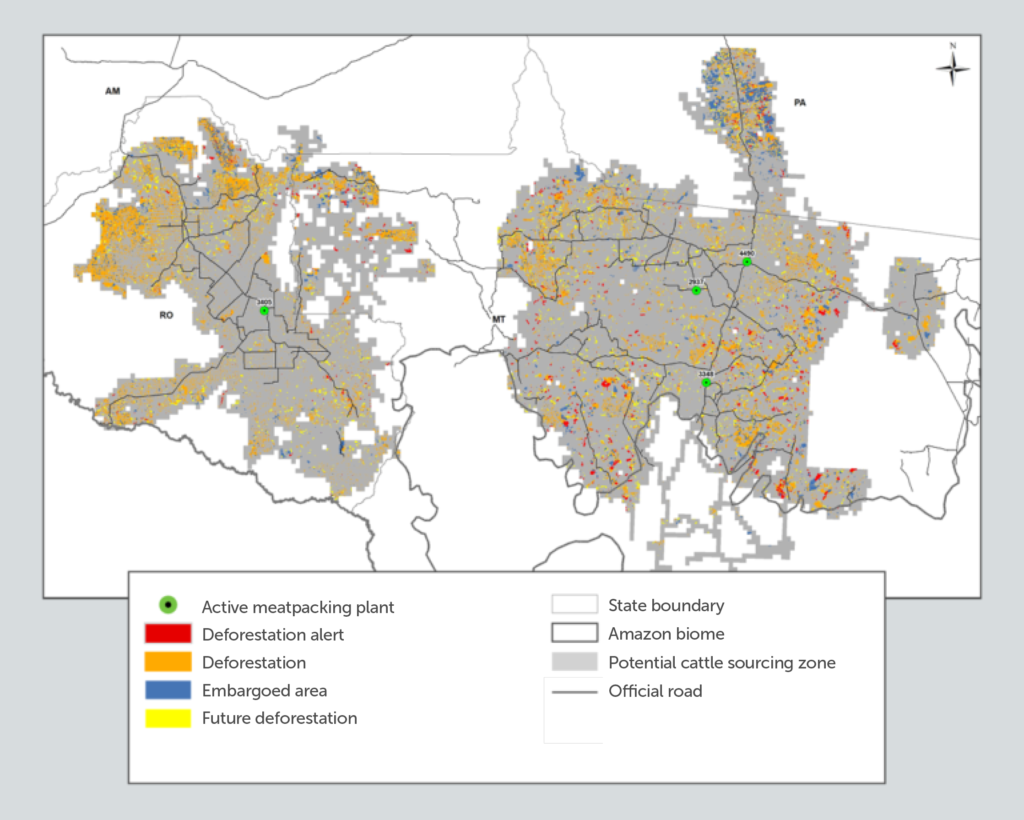
Then, to calculate risk exposure, Imazon overlays the estimated cattle sourcing zone of each plant with the risk variables (Figure 1):
Figure 1. Example of meatpacking companies’ deforestation risk exposure within their potential cattle sourcing zones in Rondônia, Mato Grosso, and Pará in Radar Verde 2024
2. Supply Chain Control Score
The Supply Chain Control Score assesses the commitment of meatpacking companies and retailers to monitor and prevent the purchase of beef associated with deforestation. The score is based on the analysis of public information and responses to the Radar Verde questionnaire sent to the companies. For meatpacking companies, the Supply Chain Control Score is one of the components that determine the final Deforestation Commitment Score.
After a 30-day period for submitting responses and supporting evidence, the Radar Verde team analyzes and classifies the establishments. Companies with a high level of control demonstrate that they do not purchase beef from direct or indirect supplying farms associated with deforestation.
For a better understanding of how the weights are distributed in calculating companies’ Supply Chain Control Score, see Figure 2 below.
Figure 2. Components Used to Calculate the Supply Chain Control Score
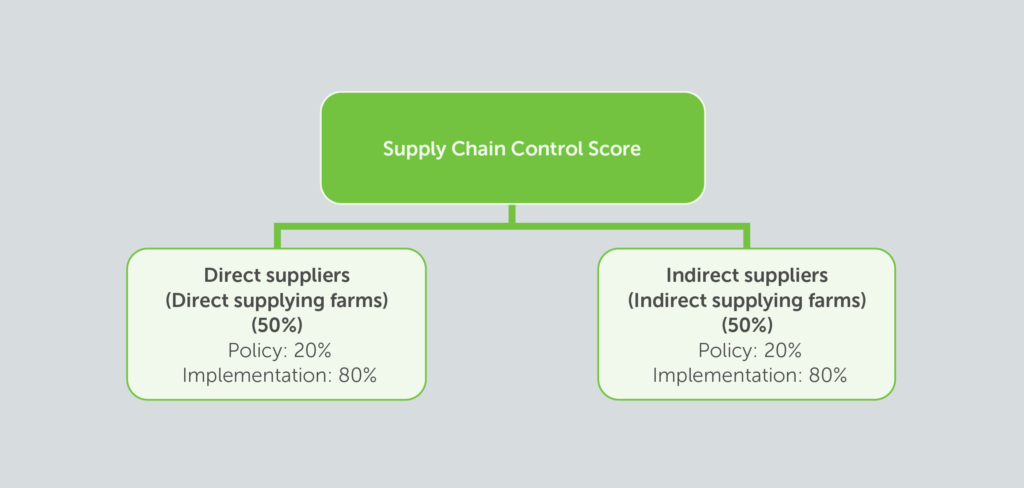
The Supply Chain Control Score assesses the company’s commitment to controlling both its direct supplying farms, which sell cattle directly to the meatpacking company, and its indirect supplying farms, which represent earlier stages of the production chain. Each group accounts for 50% of the final calculation and, within each group, two aspects are assessed: the existence of a socioenvironmental policy, weighted at 20%, and its implementation, weighted at 80%. Subsequently, the company’s Supply Chain Control Score and the level of ambition or type of anti-deforestation commitment adopted by the company will determine the Deforestation Commitment Score, which is described in greater detail below.
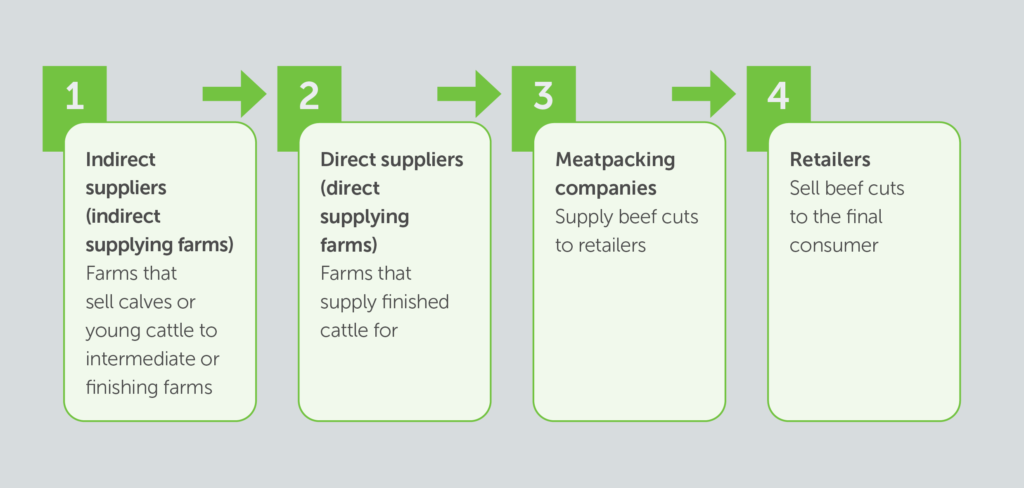
The Supply Chain Control Score assessment considers the complexity of the beef sector, which encompasses different links, from cattle raising to sales to the final consumer. The figure below illustrates this supply chain, highlighting its four main stages: indirect supplying farms, direct supplying farms, meatpacking companies, and retailers (Figure 3). While meatpacking companies are assessed based on their control over direct and indirect supplying farms, retailers are analyzed based on their level of control over the meatpacking companies from which they purchase beef and over those companies’ supplying farms.
Figure 3. Beef Supply Chain
The questionnaire used to verify the Supply Chain Control Score is administered to meatpacking companies and retailers and is divided into two main sections: policy characteristics and implementation performance.
3. Deforestation Commitment Score
The Deforestation Commitment Score measures companies’ commitment to combating total deforestation, both legal and illegal,¹ throughout their cattle supplier chains. In this assessment, it applies exclusively to meatpacking companies. These two dimensions are assessed for direct and indirect supplying farms. The final score, ranging from 0 to 100 points, is determined by two main dimensions:
A. Level of Commitment Ambition;
B. Supply Chain Control Score for Cattle Suppliers.
A. Level of Commitment Ambition
What is assessed? What is the level of ambition of the anti-deforestation policy?
Commitment against any deforestation from 2024 onward (Score multiplied by 1)
- The company does not purchase from farms with ILLEGAL deforestation occurring at any time, or with LEGAL deforestation occurring from 2023 onward;
- Represents a high standard of commitment.
Commitment against illegal deforestation (Score multiplied by 0.8)
- The company purchases only from farms with no illegal deforestation occurring at any time;
- It accepts cattle purchases from farms with deforestation carried out in compliance with the law;
- Represents a basic standard of commitment.
This distinction recognizes that companies with more ambitious commitments deserve greater recognition.
Estimation of the Supply Chain Control Score for Cattle Suppliers
The policy must cover both direct supplying farms and indirect supplying farms. Each of these links in the supplier chain accounts for 50% of the score for this pillar.
Socioenvironmental Policies (Weight = 20% of the score)
What is assessed? What does the company commit to doing?
- Whether the company has clear rules to ensure that its supplier chain does not contribute to deforestation or other socioenvironmental problems, such as inclusion on the Ministry of Labor’s list of employers associated with labor analogous to slavery.
This assessment consists of two parts, described below.
Part A – Policy Quality (Score: 0 to 100 points)
What is assessed?
- Whether the policy covers all major risks, such as deforestation and labor analogous to slavery, and establishes verification and transparency through independent audits.
- Whether the company provided evidence that the policy exists, such as public documents or questionnaire responses.
Part B – Policy Coverage (Score: 0% to 100%)
What is assessed?
- How many of the company’s meatpacking plants located in the Legal Amazon are actually following this policy?
- For example, if only 50% of the meatpacking plants are covered by the policy presented by the company, the Part A score will be reduced by 50%.
External Audits (Weight = 80% of the score)
Assesses: “Does the company comply with what it commits to, demonstrate this through independent audits, and disclose the results?”
- This criterion carries the greatest weight, accounting for 80% of the final score, because it demonstrates in practice what was implemented under the policy.
The audit score consists of two parts, described below.
Part C – Audit Performance (Score: 0 to 100 points)
What is assessed?
- Whether the company underwent independent audits conducted by contracted external firms with no conflict of interest.
- The proportion of cattle purchases that complied with the rules according to the independent auditors.
- For example, if 70% of purchases complied with the rules, the score will be 70.
Note. If a company has a total deforestation commitment, meaning that it accepts neither legal nor illegal deforestation, the audit must verify whether the company ceased purchasing from properties where any deforestation occurred for cattle ranching. To this end, the audit must verify whether the company:
- Cross-referenced the map of supplying farms with the map of all deforestation occurring after 2023. It is therefore necessary to cross-reference and analyze the complete mapping of deforestation occurring from 2023 onward, beyond areas illegally deforested or embargoed by government agencies.
- Verify whether the deforested area on supplying farms was converted into pasture. To do so, deforestation maps, such as those from PRODES, must be compared with pasture area maps, such as those from MapBiomas. This cross-referencing makes it possible to verify whether the deforestation detected on supplying properties directly resulted in the expansion of cattle ranching.
- If a company states that it has a total deforestation commitment, banning both legal and illegal deforestation, but in practice demonstrates control only over illegal deforestation, its final score will be adjusted. For this purpose, the audit result will be multiplied by a reduction factor equal to that applied to companies that declared only a commitment against illegal deforestation, meaning that the score will be multiplied by 0.8.
Part D – Audit Coverage (Score: 0% to 100%)
What is assessed?
- How many of the company’s meatpacking plants were audited.
- For example, if only 30% of the company’s meatpacking plants were audited, the score obtained in Part C is reduced to 30% (× 0.3).
How Is the Final Deforestation Commitment Score Calculated?
The final Deforestation Commitment Score is calculated in the following two steps.
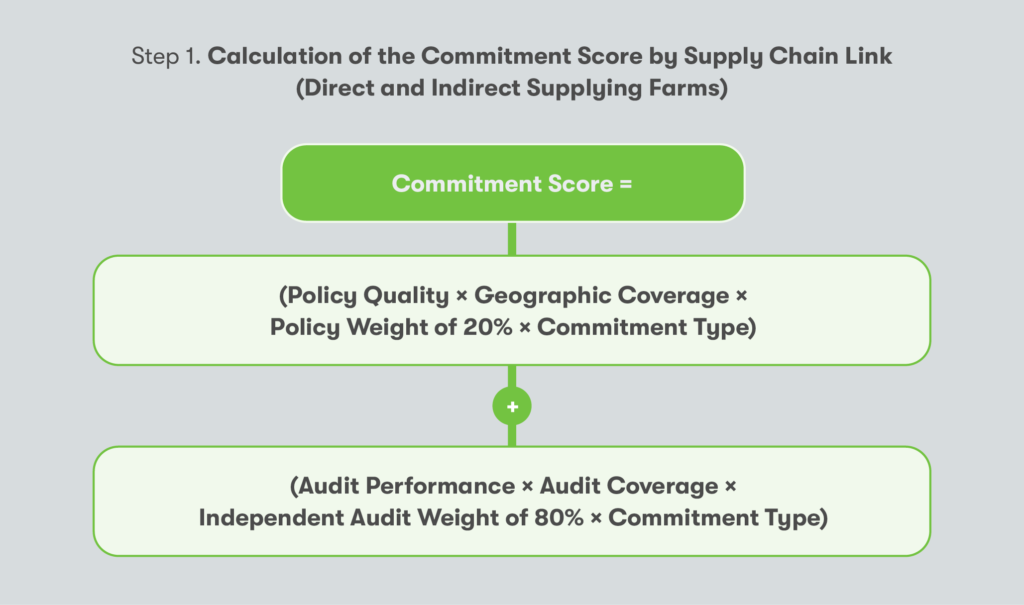
Where:
Commitment type: against any deforestation = 1.
Commitment type: against illegal deforestation = 0.8.
The same calculation is repeated for direct and indirect supplying farms.
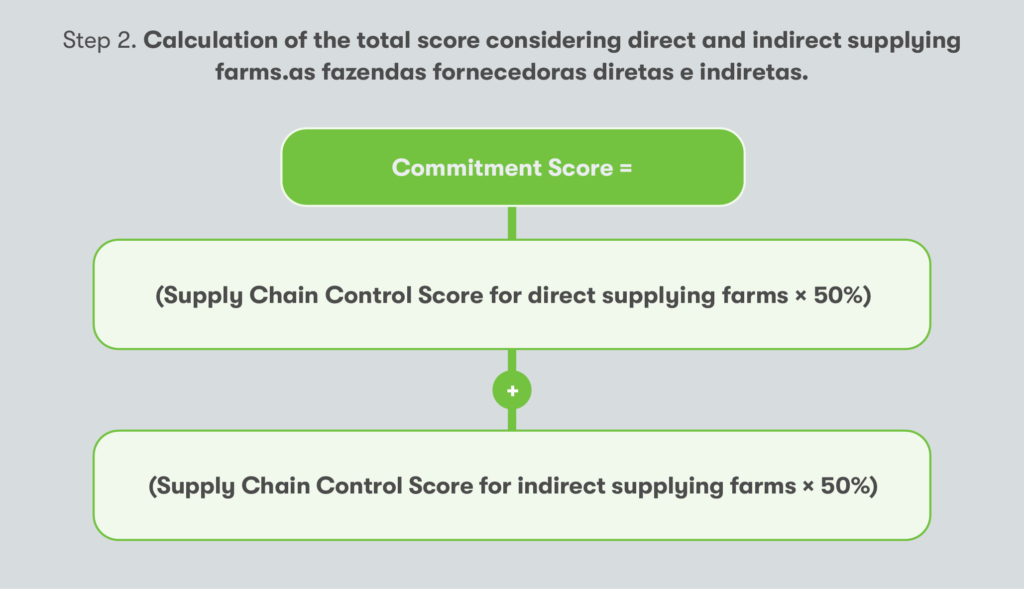
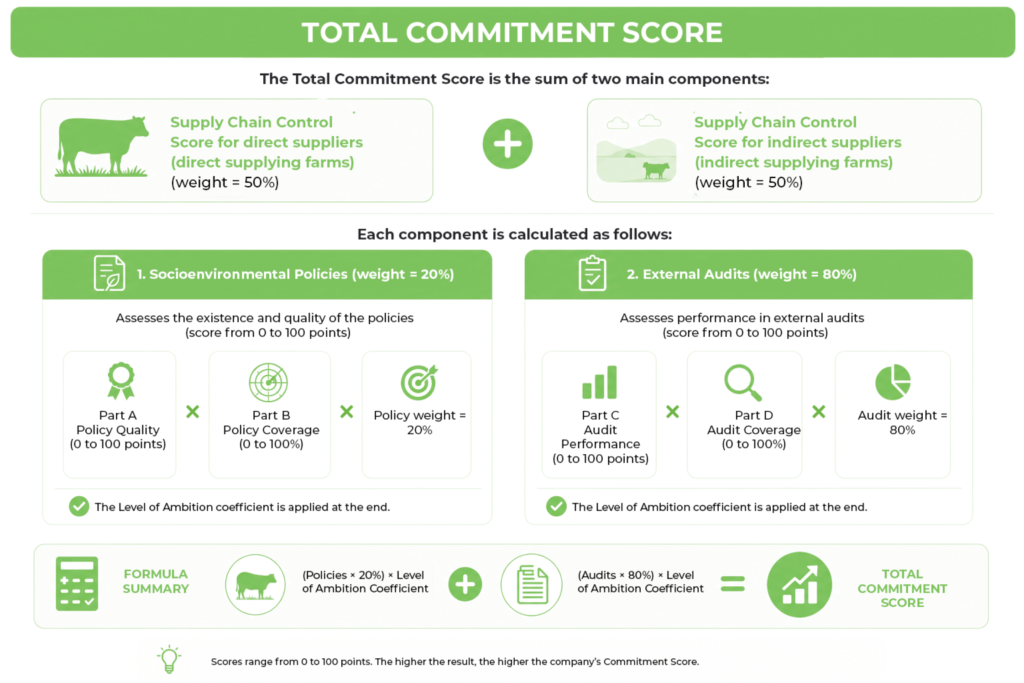
Figure 4 summarizes all components and calculation operations used to determine the total Deforestation Commitment Score.
Figure 4. Summary of the components and operations used to estimate the Deforestation Commitment Score of the meatpacking companies assessed by Radar Verde.
How Is the Final Deforestation Commitment Score Presented?
The total Deforestation Commitment Score will be rounded to the nearest whole number. The total score will be placed within the commitment score performance categories, as shown in the figure below.
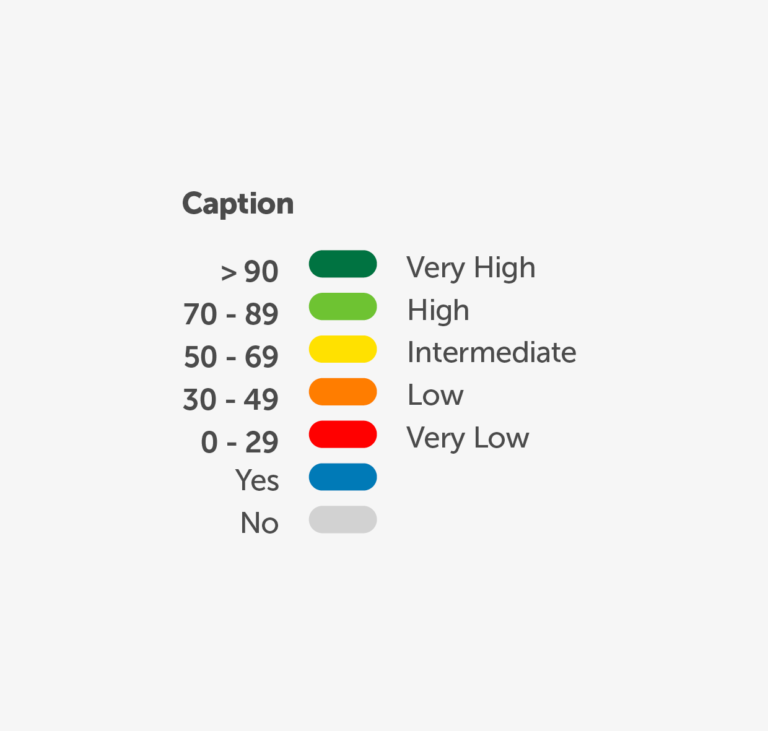
The total score will also be used to rank companies in descending order based on the scores of all companies assessed; in other words, companies with the highest scores will occupy the top positions in the ranking.